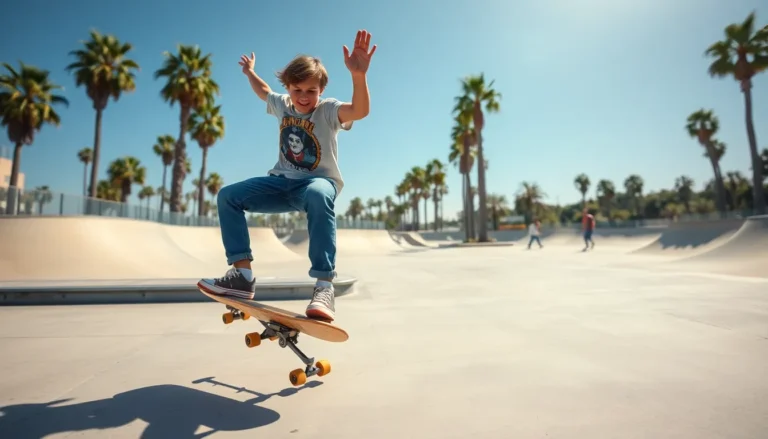
What is skateboarding? At its core, skateboarding is a sport where riders stand on a wooden board with wheels and perform tricks, race, or simply cruise. But that definition barely scratches the surface. Skateboarding has grown from a California beach pastime into a global phenomenon, complete with Olympic recognition, professional careers, and a fiercely loyal subculture. Whether someone wants to learn their first kickflip or just understand why millions of people push around on four wheels, this guide covers everything they need to know about skateboarding’s history, gear, techniques, and cultural impact.
Table of Contents
ToggleKey Takeaways
- Skateboarding is a sport where riders perform tricks, race, or cruise on a wooden board with wheels—and it’s grown into a global phenomenon with Olympic recognition.
- The sport originated in 1940s–50s California when surfers attached roller skate wheels to wooden planks, evolving through major innovations like urethane wheels in the 1970s.
- A skateboard consists of four main components: the deck, trucks, wheels, and bearings—each affecting performance based on riding style.
- Core skateboarding skills include pushing, turning, stopping, and the ollie, which serves as the foundation for almost every trick.
- Popular riding styles range from street skating on urban obstacles to vert skating on half-pipes, park skating, and casual cruising.
- Beyond competition, skateboarding represents a lifestyle rooted in freedom, self-expression, and community that has shaped fashion, music, and art worldwide.
The Origins and History of Skateboarding
Skateboarding started in the late 1940s and early 1950s when California surfers wanted something to do when the waves were flat. These early “sidewalk surfers” attached roller skate wheels to wooden planks. The results were crude, but the idea stuck.
By the 1960s, skateboarding had become a legitimate hobby. Companies like Makaha produced the first commercial skateboards, and competitions began popping up across the United States. But, the sport nearly died out by the late ’60s due to poor equipment quality and safety concerns.
Skateboarding’s first major revival came in the 1970s. Frank Nasworthy introduced urethane wheels in 1972, which provided better grip and a smoother ride than the old clay wheels. This innovation changed everything. Teams like the Z-Boys from Santa Monica’s Dogtown neighborhood pushed skateboarding into vertical terrain, riding empty swimming pools and developing an aggressive, surf-inspired style.
The 1980s brought vert skating to mainstream attention. Legends like Tony Hawk became household names through televised competitions and video games. Street skateboarding also emerged during this era, with riders using urban landscapes, stairs, rails, benches, as their playground.
Skateboarding hit its biggest milestone in 2021 when it debuted at the Tokyo Olympics. The sport now has professional leagues, global competitions, and millions of participants worldwide. What started as a surfer’s dry-land hobby has become one of the most influential action sports on the planet.
Basic Skateboard Components and Equipment
Understanding skateboard equipment helps riders choose the right setup for their style. Every skateboard consists of four main components: the deck, trucks, wheels, and bearings.
The Deck
The deck is the wooden platform where the rider stands. Most decks measure between 7.5 and 8.5 inches wide. Narrower decks work better for street skating and technical tricks. Wider decks offer more stability for ramps and transition skating. Decks are typically made from seven layers of maple wood pressed together.
Trucks
Trucks are the metal axles that attach the wheels to the deck. They allow the board to turn when the rider shifts their weight. Truck width should match the deck width for proper handling. Looser trucks turn more easily, while tighter trucks feel more stable at higher speeds.
Wheels
Skateboard wheels come in different sizes and hardness levels. Smaller wheels (50-54mm) suit street skating because they’re lighter and closer to the ground. Larger wheels (55-60mm) roll faster and handle rough surfaces better, making them ideal for cruising or skateparks. Hardness is measured on the durometer scale, harder wheels (99A+) slide easier for tricks, while softer wheels (78A-87A) grip better on rough pavement.
Bearings
Bearings sit inside the wheels and allow them to spin. They’re rated on the ABEC scale from 1 to 9. Higher ratings mean tighter tolerances and smoother rolling, though most skaters find ABEC-5 or ABEC-7 bearings perform well for general use.
Safety Gear
Helmets, knee pads, elbow pads, and wrist guards protect against common skateboarding injuries. Beginners should always wear a helmet, and even experienced skaters use full pads when learning new tricks on ramps or rails.
Fundamental Skills and Riding Styles
Learning skateboarding starts with mastering a few basic skills before moving on to specific riding styles.
Basic Skills
Pushing is the first skill every skater learns. The rider places their front foot on the board near the front bolts and pushes off the ground with their back foot. Balancing while rolling takes practice, so beginners should start on flat, smooth surfaces.
Turning comes next. By leaning on the heels or toes, riders can carve left or right. The motion feels similar to surfing or snowboarding. Kick turns, lifting the front wheels and pivoting on the back wheels, allow sharper direction changes.
Stopping safely matters more than most beginners realize. The foot drag method works well at low speeds: simply place the pushing foot on the ground and apply light pressure. More advanced skaters use powerslides, where they turn the board sideways to scrub speed.
The ollie is skateboarding’s foundational trick. The rider pops the tail of the board against the ground while jumping, then slides their front foot forward to level out the board in mid-air. Almost every skateboard trick builds on this motion.
Main Riding Styles
Street skating uses everyday urban features, stairs, handrails, ledges, and benches. Skaters perform grinds, flips, and slides on these obstacles. Street skateboarding emphasizes creativity and technical precision.
Vert skating takes place on half-pipes and ramps. Riders gain speed by pumping up and down the transitions, then launch aerial tricks off the lip. This style requires speed, timing, and a tolerance for big falls.
Park skating blends street and vert elements in purpose-built skateparks. Bowls, quarter-pipes, and street obstacles combine in one space.
Cruising focuses on transportation and relaxation rather than tricks. Cruiser boards with larger, softer wheels handle sidewalks and rough roads comfortably.
Skateboarding as a Sport and Lifestyle
Skateboarding functions as both a competitive sport and a cultural identity. Understanding both sides explains why skateboarding inspires such devotion.
On the competitive side, skateboarding now features professional leagues with serious prize money. Street League Skateboarding (SLS) hosts global events where top pros compete for hundreds of thousands of dollars. The X Games has featured skateboarding since 1995. Olympic inclusion brought even more attention, skaters like Nyjah Huston and Sky Brown became international celebrities after Tokyo 2021.
But many skaters don’t compete at all. For them, skateboarding represents freedom, self-expression, and community. There are no coaches, no set schedules, no teammates to rely on. Each skater progresses at their own pace and develops their own style. A trick looks different depending on who performs it, and that individuality matters in skate culture.
Skateboarding has also shaped fashion, music, and art. Brands like Vans, Thrasher, and Supreme started within skate culture before crossing into mainstream popularity. Punk rock, hip-hop, and skateboarding have long shared audiences and attitudes. Skate videos function as both athletic showcases and creative films, with filming and editing styles that influenced music videos and advertising.
The skatepark serves as a social hub. People of all ages, backgrounds, and skill levels share the same space. Experienced skaters often teach beginners. That sense of community keeps people involved in skateboarding long after they’ve stopped learning new tricks.
Skateboarding asks one question: what can you do with a board, four wheels, and whatever obstacles you find? The answer changes every session, and that endless possibility is exactly what keeps millions of people pushing.