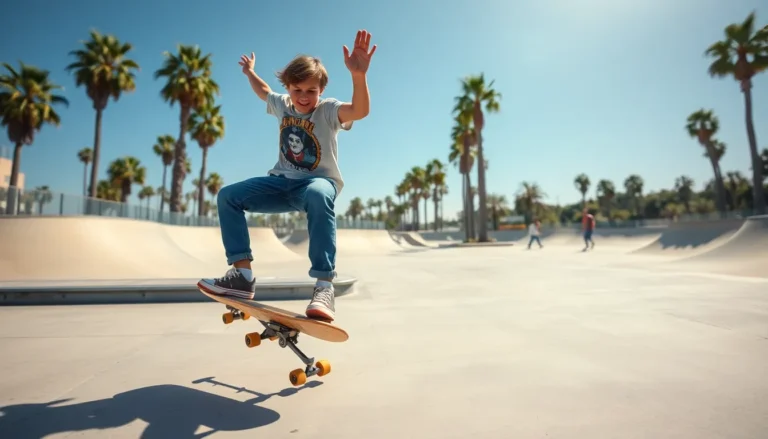
Skateboarding for beginners starts with the right knowledge and a willingness to fall, a lot. This sport has grown from a California subculture into a global phenomenon, with over 85 million skateboarders worldwide. Whether someone wants to cruise through their neighborhood or eventually land kickflips, every pro started exactly where new riders stand today: staring at a board and wondering how to stay upright.
This guide covers everything a first-time skater needs to know. From picking the right board to learning basic tricks, each section breaks down the essentials in clear, practical terms. Skateboarding rewards patience and persistence, and understanding the fundamentals early saves time and prevents bad habits. Let’s get rolling.
Table of Contents
ToggleKey Takeaways
- Skateboarding for beginners starts with choosing a quality complete board ($80–$150) from trusted brands, as cheap boards make learning harder and less safe.
- Always wear certified safety gear—helmets, knee pads, elbow pads, and wrist guards—since falling is a normal part of learning to skate.
- Determine your natural stance (regular or goofy) by noticing which foot steps forward first when pushed from behind.
- Master the three essential skills—pushing, turning, and stopping—on flat, smooth surfaces before attempting hills or tricks.
- Start with beginner-friendly tricks like tic-tacs and manuals to build balance and board control before progressing to ollies.
- Patience and persistence are essential for skateboarding beginners, as each foundational skill connects to more advanced techniques later.
Choosing Your First Skateboard
The first skateboard matters more than most beginners realize. A quality setup helps new skaters learn faster and stay safer. Cheap department store boards often have poor bearings, plastic trucks, and slippery grip tape, all of which make learning harder.
Complete vs. Custom Boards
Beginners should start with a complete skateboard rather than building a custom setup. Complete boards come pre-assembled and cost between $80 and $150 from reputable brands. Custom boards offer more control over components but require knowledge that new skaters don’t have yet.
Deck Size
Deck width ranges from 7.5 to 8.5 inches for most street and park skating. Beginners with smaller feet (size 9 or below) should choose decks around 7.75 to 8 inches wide. Larger riders benefit from 8.25 to 8.5-inch decks, which provide more stability.
Trucks and Wheels
Trucks should match the deck width. A 7.75-inch deck pairs well with trucks around 129mm. Wheels between 52mm and 54mm work best for beginners learning on smooth surfaces. Softer wheels (78a-87a durometer) handle rough pavement better, while harder wheels (99a-101a) suit skateparks.
Trusted Brands
Stick with established skateboard companies like Element, Baker, Girl, or Enjoi for decks. Independent and Thunder make reliable trucks. Spitfire and Bones produce quality wheels. These brands have decades of experience and won’t cut corners on materials.
Essential Gear and Safety Equipment
Skateboarding for beginners involves falling. A lot. Proper safety gear reduces injuries and builds confidence to try new things.
Helmets
A certified helmet is non-negotiable. Look for CPSC or ASTM certification stickers inside the helmet. Skate-specific helmets from brands like Triple Eight, Pro-Tec, or S1 cover more of the back of the head than bike helmets. The helmet should fit snugly without wobbling.
Pads
Knee pads and elbow pads absorb impact during falls. Wrist guards protect against the instinct to catch oneself with outstretched hands, a common cause of fractures among new skaters. Quality pads from 187 Killer Pads or Triple Eight cost between $30 and $60 per set.
Footwear
Skate shoes have flat soles that grip the board and padded collars that protect ankles. Running shoes and sandals don’t work, their curved soles make balance difficult and offer no board feel. Vans, Nike SB, and Etnies all make purpose-built skate shoes.
Clothing
Wear clothes that allow movement but aren’t loose enough to catch on the board. Long pants protect knees during slides. Many beginners start in jeans or joggers and a comfortable t-shirt.
Basic Stance and Balance Fundamentals
Balance forms the foundation of everything in skateboarding for beginners. Before attempting any movement, new skaters must understand stance and weight distribution.
Regular vs. Goofy
Skaters stand in one of two positions: regular (left foot forward) or goofy (right foot forward). Neither is better, it’s about personal comfort. To find natural stance, have someone gently push from behind. Whichever foot steps forward first to catch balance is likely the front foot.
Foot Placement
The front foot sits near the front bolts (the screws that attach the trucks to the deck). The back foot rests on or near the tail. Feet should angle slightly outward, around 15-45 degrees, rather than pointing straight ahead.
Weight Distribution
New skaters often lean too far back out of fear. This actually causes more falls. Keep weight centered over the board with slightly bent knees. The knees act as shock absorbers and help maintain balance.
Practice Stationary
Before moving, spend time standing on the board on grass or carpet. These surfaces prevent rolling and let beginners feel the board’s tilt and flex. Rock gently side to side and front to back. This builds muscle memory without the added challenge of motion.
Eyes Up
Look ahead, not down at the feet. The body follows where the eyes go. Staring at the board creates tension and throws off balance. Trust the feet to stay in place.
Your First Moves: Pushing, Turning, and Stopping
Once comfortable standing on a stationary board, it’s time to move. These three skills, pushing, turning, and stopping, form the basis of all skateboarding for beginners.
Pushing
Pushing propels the skateboard forward. Place the front foot over the front bolts, angled toward the nose. Take the back foot off the board and push against the ground in a smooth, backward motion. After each push, return the back foot to the tail and square up the front foot.
Start with gentle pushes on flat, smooth ground. A parking lot on a Sunday morning or an empty tennis court works well. Avoid hills until pushing and stopping feel natural.
Turning
Skateboards turn through two methods: leaning and kick turns.
Lean turns happen by shifting weight to the toes (toeside turn) or heels (heelside turn). The trucks respond to this pressure and angle the board in that direction. Loose trucks turn sharper: tight trucks feel more stable.
Kick turns involve lifting the front wheels by pressing down on the tail, then pivoting on the back wheels. This allows sharper direction changes. Practice kick turns while stationary before attempting them while rolling.
Stopping
Beginners have several stopping options:
- Foot brake: Drag the sole of the back foot along the ground. This wears out shoes but works reliably.
- Heel drag: Press the back heel over the tail’s edge and drag it on the ground.
- Run off: At slow speeds, simply step off the board and jog to a stop.
- Powerslide: An advanced technique where the board slides sideways. Save this for later.
Practice stopping at slow speeds first. Gradually increase speed as confidence grows.
Beginner Tricks to Practice
After mastering the basics, most skaters want to learn tricks. These beginner-friendly moves build skills without requiring advanced technique.
Tic-Tac
Tic-tacs generate speed without pushing. Shift weight to the tail, lift the nose, and pivot left. Then pivot right. This back-and-forth motion creates forward momentum. Tic-tacs also improve balance and board control.
Manual
A manual is skateboarding’s version of a wheelie. Roll at moderate speed, shift weight to the back foot, and lift the front wheels off the ground. The goal is balance, not height. Keep the tail from touching the ground. Even holding a manual for two seconds takes practice.
Kickturn
The kickturn from the previous section becomes a trick when performed on ramps. On a small bank or quarter pipe, ride up at an angle, perform a 180-degree kick turn at the top, and roll back down. This teaches ramp basics and prepares skaters for more advanced transitions.
Ollie (Introduction)
The ollie is skateboarding’s most important trick, it gets the board airborne. The full ollie takes months to learn, but beginners can start the process early.
Stand still and practice the motion: pop the tail down sharply with the back foot while jumping, then slide the front foot up toward the nose. The board rises with the body. Practice this motion on grass before attempting it while rolling.
Don’t rush these tricks. Skateboarding for beginners is about building a foundation. Each small skill connects to bigger ones later.