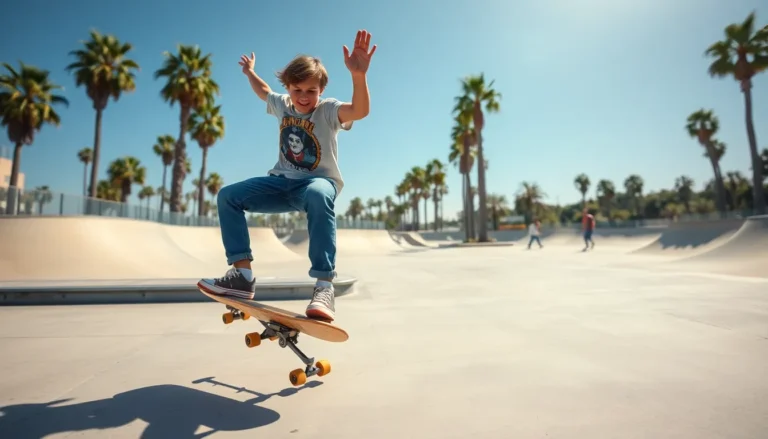
Skateboarding examples range from simple ollies to complex aerial maneuvers that take years to master. Whether someone watches professionals compete at the Olympics or sees kids practicing kickflips at the local park, skateboarding offers countless ways to express creativity on four wheels. This guide breaks down the major tricks, styles, and disciplines that define skateboarding today. From street skating to vert ramps, freestyle flatground to longboard cruising, there’s a skateboarding style for every interest and skill level. Understanding these skateboarding examples helps beginners find their path and gives experienced skaters new ideas to try.
Table of Contents
ToggleKey Takeaways
- Skateboarding examples span multiple disciplines—from street tricks and vert ramps to freestyle flatground and longboard cruising—offering something for every skill level.
- The ollie is the foundational trick every street skater must learn, as it unlocks access to kickflips, grinds, and most other technical maneuvers.
- Vert and transition skating focus on aerial tricks and lip maneuvers, with professionals now landing 1080s (three full rotations) in competition.
- Freestyle and technical flatground skating emphasize board control and complex flip combinations without obstacles, pioneered by legends like Rodney Mullen.
- Longboarding provides accessible skateboarding examples centered on cruising, downhill speed, dancing, and carving rather than traditional tricks.
- Competitive skateboarding has reached new heights since its Olympic debut in 2020, with street, park, and vert events showcasing the sport’s elite talent worldwide.
Classic Street Skateboarding Tricks
Street skateboarding remains the most popular form of the sport. Skaters use urban environments, stairs, handrails, benches, and ledges, as their playground. These skateboarding examples showcase creativity and technical skill in everyday settings.
The ollie forms the foundation of street skating. Invented by Alan “Ollie” Gelfand in 1978, this trick involves popping the tail while sliding the front foot up the board. Every street skater learns this first. Without it, most other tricks become impossible.
The kickflip adds a board rotation to the ollie. The skater flicks their front foot off the edge, causing the board to spin 360 degrees along its length. Tony Hawk called it “the trick that changed everything” because it opened doors to hundreds of variations.
Grinds and slides define street skating’s relationship with architecture. A 50-50 grind locks both trucks onto a rail or ledge. A boardslide puts the deck itself across the obstacle. A nose grind balances on just the front truck, difficult but visually striking.
Other essential street skateboarding examples include:
- Heelflip: Similar to a kickflip, but the board spins the opposite direction
- Pop shove-it: The board rotates 180 degrees beneath the skater’s feet
- Tre flip (360 flip): Combines a kickflip with a 360-degree board spin
- Manual: Rolling on only the back or front wheels, like a skateboard wheelie
Street skating rewards creativity. Two skaters can approach the same ledge and create completely different lines. This freedom makes street skateboarding examples so diverse and personal.
Vert and Transition Skateboarding
Vert skateboarding takes place on halfpipes and ramps with vertical walls. These structures let skaters gain serious air, sometimes 10 feet or more above the coping. Transition skating uses quarter pipes, bowls, and pools with curved surfaces.
The aerial defines vert skating. Tony Hawk’s 900 (two-and-a-half rotations) at the 1999 X Games became one of skateboarding’s most famous moments. Today, skaters like Gui Khury have landed 1080s, three full rotations in the air.
Airs come in many forms as skateboarding examples on vert:
- Method air: Grabbing the board while kicking both legs behind
- Indy air: Grabbing the toe edge between the feet with the back hand
- Stalefish: Reaching behind the back leg to grab the heel edge
- McTwist: A 540-degree rotation with a front flip, invented by Mike McGill
Transition skating also includes lip tricks performed at the coping (the metal pipe at the top of the ramp). Rock to fakie, rock and roll, axle stalls, and blunt stalls all require balance at the very edge.
Bowl skating combines elements of vert and street. Skaters carve around curved walls, pump for speed, and hit tiles, hips, and corners. Many skateparks now feature flow bowls designed for this purpose.
Vert skating demands commitment. Falling from height hurts. But the feeling of flying above a 12-foot wall keeps dedicated vert skaters coming back.
Freestyle and Technical Flatground Examples
Freestyle skateboarding predates modern street skating. In the 1970s and 1980s, skaters performed tricks on flat ground, often to music. This discipline focuses on board control, footwork, and technical precision.
Classic freestyle skateboarding examples include railstands (balancing on the board’s side rail), primo slides (sliding on the board while it’s on its side), and caspers (balancing with the board upside down on one foot).
Modern technical flatground skating evolved from freestyle roots. Today’s tech skaters string together complex flip trick combinations without using any obstacles. The emphasis falls on difficulty, creativity, and clean execution.
Flatground skateboarding examples worth knowing:
- Nollie (nose ollie): Popping from the nose instead of the tail
- Fakie: Riding backward while performing tricks
- Switch: Riding with the opposite stance (a regular-footer skating goofy)
- Pressure flips: Using foot pressure rather than a flick to rotate the board
- Late flips: Adding a flip after the initial trick
Skaters like Rodney Mullen invented many of these tricks. He’s credited with creating the flatground ollie, kickflip, heelflip, and 360 flip. His influence on technical skateboarding examples can’t be overstated.
Tech skating rewards patience. Landing a new trick after hundreds of attempts creates genuine satisfaction. Flat ground also remains accessible, no ramps or obstacles required.
Longboarding and Cruising Styles
Longboarding offers different skateboarding examples focused on transportation, speed, and flow rather than tricks. These longer, wider boards handle better at high speeds and provide a smoother ride.
Downhill longboarding pushes speeds past 50 mph on steep roads. Riders wear full-face helmets and leather suits. They use sliding techniques, pushing the board sideways, to control speed through turns. This discipline requires serious skill and carries real risk.
Freeride longboarding emphasizes sliding and technical control at moderate speeds. Skaters perform standup slides, hands-down slides, and 360-degree spins while descending hills.
Dancing combines longboarding with footwork inspired by boardwalk skating and surfing. Dancers walk up and down their boards, performing cross-steps, pirouettes, and body movements. Longer decks (42 inches or more) give dancers room to move.
Cruising represents the most accessible form of longboarding. Riders push around town, commute to work, or simply enjoy the ride. Soft wheels absorb rough pavement. Flexible decks provide a surfy feel.
Other longboarding skateboarding examples include:
- Carving: Making deep S-turns to build speed without pushing
- Pumping: Generating momentum through body movement alone
- Slalom: Racing through cones in tight, quick turns
Longboarding attracts people who might not connect with traditional skateboarding. The lower learning curve and practical applications make it welcoming.
Skateboarding in Competitive Settings
Competitive skateboarding has grown significantly since the sport’s Olympic debut in Tokyo 2020. Events now feature substantial prize money and global audiences. Different formats showcase various skateboarding examples.
Street competitions use courses with stairs, rails, ledges, and gaps. Skaters perform runs (45-second routines) and best trick attempts. Judges score based on difficulty, execution, originality, and consistency. Nyjah Huston and Rayssa Leal represent top street competitors.
Park competitions take place in bowl-style courses with curved transitions. Skaters must use the entire course while performing airs, grinds, and technical tricks. Sky Brown became the youngest Olympic medalist in skateboarding at age 13 in this discipline.
Vert competitions feature halfpipe riding. While less common than street or park events, vert contests still attract dedicated audiences. The format rewards amplitude (height), technical difficulty, and style.
Game of S.K.A.T.E. works like basketball’s H.O.R.S.E. One skater sets a trick: the opponent must match it. Failure earns a letter. First to spell S.K.A.T.E. loses. This format tests pure trick knowledge and consistency.
Major skateboarding competitions include:
- X Games: Running since 1995, still prestigious
- Street League Skateboarding (SLS): Premier professional street contest series
- Tampa Pro: Historic contest known for launching careers
- Olympic Games: Highest global visibility
Competitive skateboarding examples demonstrate the sport’s highest levels of performance. But most skaters still prefer sessions with friends over formal competition.