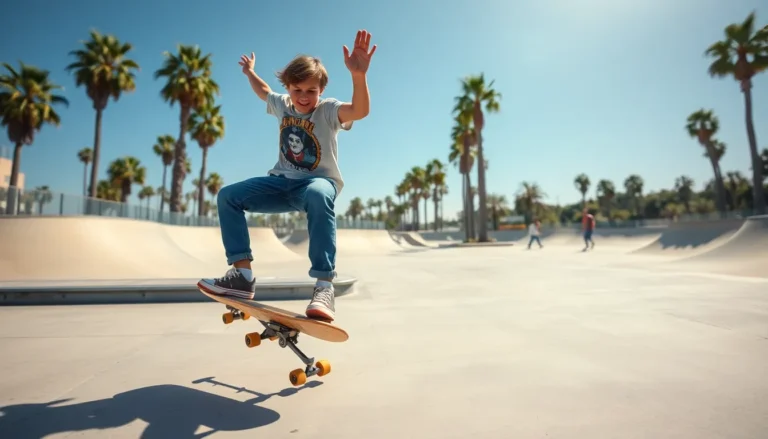
Skateboarding has transformed from a backyard pastime into a global phenomenon. What started as surfers looking for something to do on flat days became an Olympic sport and a multi-billion dollar industry. Today, millions of people ride skateboards across every continent.
This guide covers everything from skateboarding history to essential gear, beginner tricks, and the vibrant culture that makes the sport unique. Whether someone wants to learn their first ollie or simply understand why skateboarding matters, this article provides a clear path forward.
Table of Contents
ToggleKey Takeaways
- Skateboarding evolved from 1950s California sidewalk surfing to an Olympic sport by 2021, proving its lasting cultural impact.
- Beginners should choose a skateboard deck width (7.5–8.5 inches) based on shoe size, with wider decks offering more stability.
- The ollie is skateboarding’s foundational trick—master it first, as nearly every advanced maneuver builds from this motion.
- Safety gear, especially certified helmets, is essential for all beginners to prevent serious injuries while learning.
- Skate culture values authenticity and individual style over perfect execution, attracting creatives from all backgrounds.
- Local skate shops and DIY spots form the heart of skateboarding communities, keeping the grassroots spirit alive.
The History and Evolution of Skateboarding
Skateboarding began in California during the late 1940s and early 1950s. Surfers attached roller skate wheels to wooden planks to “sidewalk surf” when ocean waves were flat. These early boards were crude, but they sparked something new.
The first commercial skateboards appeared in 1959. Companies like Roller Derby sold complete boards to eager young riders. By the mid-1960s, skateboarding had its first boom. Manufacturers sold millions of boards, and the sport appeared in magazines and TV shows.
Then came the crash. Poor wheel technology made skating dangerous. Cities banned skateboarding, and interest faded by 1965. The sport nearly died.
Urethane wheels changed everything in 1972. Frank Nasworthy’s Cadillac Wheels offered grip and control that clay wheels never could. Skateboarding roared back to life. Skate parks opened across America, and vertical skating emerged. Riders like Tony Alva and Stacy Peralta became the first skateboarding stars.
The 1980s brought street skating into focus. Skaters abandoned empty pools for urban environments. They used stairs, handrails, and curbs as obstacles. This shift made skateboarding accessible to anyone with concrete nearby.
Modern skateboarding owes much to the 1990s underground scene. While mainstream popularity dipped, dedicated skaters refined tricks and built communities. Video parts replaced magazine photos as the primary way riders shared their skills.
Skateboarding reached its peak recognition in 2021 when it debuted at the Tokyo Olympics. Athletes from dozens of countries competed on the world stage. The sport had traveled from California beaches to Olympic gold medals in seven decades.
Essential Gear for Getting Started
A quality skateboard setup makes learning easier and safer. Here’s what beginners need to get rolling.
The Skateboard Deck
Decks range from 7.5 to 8.5 inches wide for most riders. Smaller decks suit technical street skating. Wider decks provide stability for ramps and transitions. Beginners should choose based on their shoe size, larger feet generally work better on wider decks.
Maple wood remains the standard material. Seven-ply construction offers the best balance of strength and flexibility. Expect to pay between $50 and $80 for a decent deck.
Trucks, Wheels, and Bearings
Trucks connect the wheels to the deck and allow turning. They should match the deck width. Independent, Thunder, and Venture make reliable trucks that last for years.
Wheel size affects speed and trick capability. Smaller wheels (50-54mm) work best for street skating. Larger wheels (55-60mm) roll faster over rough surfaces. Hardness matters too, softer wheels grip better, while harder wheels slide more easily.
Bearings determine how smoothly wheels spin. Rated on the ABEC scale, most skaters use ABEC 5 or 7 bearings. Bones Reds offer excellent performance at a reasonable price.
Safety Equipment
Helmets prevent serious head injuries. Certified helmets meet CPSC or ASTM standards. Every beginner should wear one without exception.
Knee pads and wrist guards reduce common injuries from falls. Elbow pads help too, especially when learning transition skating. Some riders skip pads after gaining experience, but protection makes sense while building skills.
Basic Tricks Every Beginner Should Learn
Skateboarding tricks build on each other. Master the basics before attempting advanced maneuvers.
Pushing and Stopping
Before tricks, riders must learn to push. The front foot stays on the board near the front bolts. The back foot pushes against the ground. Regular footers push with their right foot: goofy footers push with their left.
Stopping requires control. The foot drag method works best for beginners, simply drag the pushing foot along the ground. More advanced riders use the tail to slow down or powerslide to a stop.
The Ollie
The ollie is skateboarding’s foundational trick. It allows riders to jump with the board. Almost every other trick builds from this motion.
To ollie, the rider snaps the tail against the ground while jumping. The front foot slides up the board, leveling it in the air. Timing matters more than strength. Most beginners need weeks of practice to land a clean ollie.
Kickturns and Tic-Tacs
Kickturns teach weight distribution and board control. The rider lifts the front wheels by pressing on the tail, then pivots left or right. This skill proves essential for ramp skating.
Tic-tacs combine small kickturns to gain speed without pushing. They also help riders maintain balance and rhythm on flat ground.
The Pop Shuvit
Once the ollie feels comfortable, the pop shuvit comes next. The board spins 180 degrees beneath the rider’s feet. The back foot scoops the tail backward while the front foot guides the rotation. It looks impressive but requires less precision than a kickflip.
The Culture and Community Behind the Board
Skateboarding is more than a sport. It’s a creative outlet, a social network, and for many, an identity.
Skate culture values authenticity above all. Style matters as much as difficulty. A rider who lands tricks with personality earns more respect than one who simply executes them cleanly. This emphasis on individual expression attracts artists, musicians, and creatives of all types.
Local skate shops serve as community hubs. They sponsor local riders, organize events, and provide spaces where skaters connect. Supporting these shops keeps skateboarding culture alive at the grassroots level.
Skateboarding videos define the culture’s visual language. From the Bones Brigade videos of the 1980s to modern YouTube parts, video documentation drives progression. Riders study footage to learn tricks and find inspiration. Iconic video parts become cultural touchstones that fans reference for decades.
The community embraces diversity. Skateboarding doesn’t require teams, coaches, or expensive facilities. Anyone with a board can participate. This accessibility creates space for people from all backgrounds. Women’s skateboarding has grown dramatically in recent years, with riders like Margielyn Didal and Momiji Nishiya inspiring new generations.
DIY skate spots represent the community’s self-reliant spirit. When cities lack proper facilities, skaters build their own. From backyard ramps to transformed urban spaces, these projects show what dedicated communities can create.