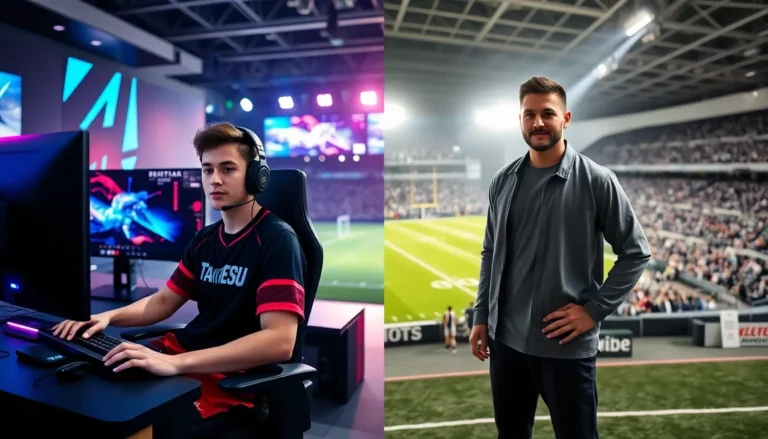
Esports examples range from fast-paced shooters to strategic battle arenas, each attracting millions of players and viewers worldwide. Competitive gaming has grown into a billion-dollar industry, with professional players earning salaries, sponsorships, and prize money that rival traditional sports. Whether someone watches a League of Legends championship or a Counter-Strike major, they’re witnessing esports at its peak. This guide breaks down the most popular esports games by genre, highlights the biggest tournaments, and explains what makes a video game qualify as an esport in the first place.
Table of Contents
ToggleKey Takeaways
- Esports examples span multiple genres, including first-person shooters like Counter-Strike 2 and Valorant, MOBAs like League of Legends and Dota 2, and fighting games like Street Fighter 6.
- A video game qualifies as an esport when it has competitive structure, a high skill ceiling, spectator appeal, developer support, and an active community.
- The International (Dota 2) holds the record for largest esports prize pool, distributing over $300 million since 2011.
- League of Legends and Counter-Strike remain the most popular esports examples, drawing millions of concurrent viewers during world championship events.
- Major tournaments like EVO, Valorant Champions Tour, and the League of Legends World Championship showcase how diverse and global competitive gaming has become.
What Defines an Esport
Not every video game becomes an esport. Several key factors separate casual games from competitive esports examples that fill arenas and stream to millions.
Competitive Structure
An esport requires a clear competitive framework. Games need rankings, matchmaking systems, and standardized rules that allow players to compete fairly. Without these elements, a game stays recreational rather than professional.
Skill Ceiling
The best esports examples reward skill development over time. Games like StarCraft II and Rocket League have high skill ceilings, meaning players can improve for years without mastering everything. This depth keeps both players and audiences engaged.
Spectator Appeal
Viewership matters. Esports games need to be entertaining to watch, even for people who don’t play them. Clear visuals, exciting moments, and understandable objectives help games succeed as spectator sports. Counter-Strike works well here because viewers can follow the action: one team plants a bomb, the other tries to stop them.
Developer Support
Game developers play a major role in esports success. They organize tournaments, release balance updates, and invest in broadcasting infrastructure. Riot Games, for instance, runs the entire League of Legends esports ecosystem. Without ongoing developer commitment, competitive scenes often fade.
Community and Player Base
A thriving community sustains any esport. Players need opponents to compete against, content creators to generate interest, and fans to watch events. The most successful esports examples maintain active communities across multiple regions.
Popular Esports Games by Genre
Esports examples span multiple genres, each offering different competitive experiences. Here’s a breakdown of the most popular categories and their standout titles.
First-Person Shooters
First-person shooters (FPS) dominate esports viewership. These games test reflexes, aim, and tactical thinking.
Counter-Strike 2 remains the gold standard for competitive FPS. Teams of five compete in round-based matches, planting or defusing bombs. The game has maintained popularity since its original release in 1999, with CS2 launching in 2023 as the latest version.
Valorant combines FPS mechanics with character abilities. Riot Games released it in 2020, and it quickly became one of the biggest esports examples in the shooter category. Each agent brings unique skills to five-versus-five matches.
Call of Duty runs an annual league structure through the Call of Duty League (CDL). Teams compete across a season, with playoffs determining the champion. The franchise rotates titles yearly, keeping the competitive scene fresh.
Multiplayer Online Battle Arenas
MOBA games feature two teams competing to destroy each other’s base. These esports examples require strategy, teamwork, and quick decision-making.
League of Legends leads the MOBA category. Riot Games’ flagship title attracts over 100 million monthly players. Professional leagues operate in North America, Europe, China, Korea, and other regions. The World Championship regularly draws tens of millions of concurrent viewers.
Dota 2 offers a deeper, more complex take on the MOBA formula. Valve’s game features annual International tournaments with prize pools exceeding $30 million. The 2021 International set a record with a $40 million prize pool, the largest in esports history.
Sports and Fighting Games
Traditional sports simulations and fighting games round out major esports examples.
EA Sports FC (formerly FIFA) features professional leagues and tournaments. Players compete in one-on-one matches simulating real soccer. The game attracts both endemic esports organizations and actual soccer clubs.
Rocket League combines soccer with rocket-powered cars. Its simple concept, hit ball into goal, creates surprisingly deep competitive play. The Rocket League Championship Series (RLCS) runs year-round with substantial prize pools.
Street Fighter 6 represents the fighting game community (FGC). Capcom’s latest entry revitalized competitive interest in the franchise. Tournaments like EVO showcase top players in bracket-style competition.
Super Smash Bros. Ultimate maintains a grassroots competitive scene. Nintendo’s platform fighter draws large crowds at major events, though the company provides less official support than other publishers.
Major Esports Tournaments and Leagues
The biggest esports examples come alive during major tournaments. These events showcase top talent, offer massive prize pools, and attract global audiences.
The International (Dota 2)
Valve’s annual Dota 2 championship remains legendary for its prize pools. Crowdfunded through in-game purchases, The International has distributed over $300 million in prizes since 2011. The tournament brings 16-20 teams to compete over two weeks.
League of Legends World Championship
Riot Games’ Worlds tournament caps each competitive season. Teams from regional leagues qualify through playoffs. The 2023 finals in Seoul drew peak viewership of over 6 million concurrent viewers on streaming platforms alone. The event rotates host cities globally.
Counter-Strike Majors
Valve sponsors two CS2 Majors per year with $1.25 million prize pools each. These tournaments determine the best teams in the world. Third-party organizers like ESL and BLAST run additional premier events throughout the year.
Valorant Champions Tour
Riot structures Valorant competition through a global circuit. Teams compete in regional leagues, then advance to international events. Champions, the year-end tournament, crowns the world’s best team.
EVO Championship Series
EVO stands as the premier fighting game event. Held annually in Las Vegas, it features tournaments across multiple fighting games simultaneously. Street Fighter, Tekken, and Guilty Gear all crown champions during the weekend event.
Overwatch Champions Series
After retiring the Overwatch League format, Blizzard launched OWCS in 2024. The new structure features open competition with regional tournaments leading to international championships.
These esports examples demonstrate how varied competitive gaming has become. Each tournament brings its own format, prize structure, and viewing experience.